
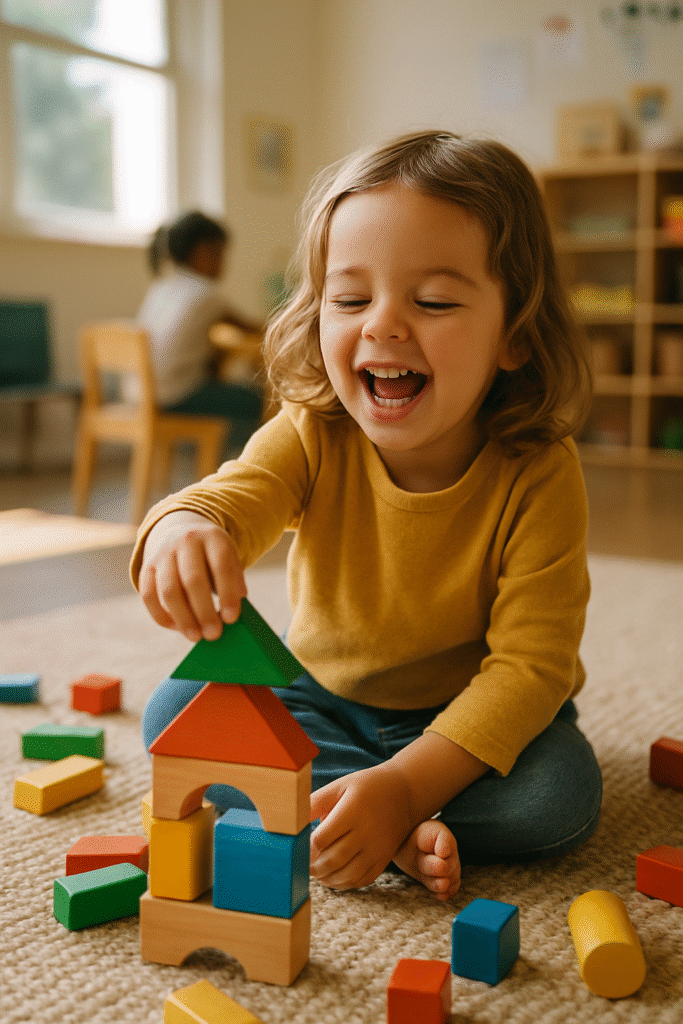
Look, I’m gonna be straight with you. As a parent myself (and someone who’s watched way too many kids turn into tiny tornadoes at birthday parties), I’ve seen firsthand how play shapes our little ones. And honestly? It’s not just about keeping them busy while we sneak a coffee.
## **Play Is Their Job**
You know how we adults go to work? Well, play IS work for kids. Seriously.
When your three-year-old is building that wonky tower with blocks for the 47th time today… they’re actually:
– Problem solving (“why does it keep falling?”)
– Developing motor skills
– Learning about gravity (even if they can’t spell it yet)
– Building confidence
And here’s the kicker – they don’t even KNOW they’re learning. That’s the magic.
## **The Science Bit (But I’ll Keep It Simple)**
Okay so brain researchers – smart people with fancy degrees – they’ve found that play literally builds neural pathways. Think of it like this: every time your kid plays, they’re laying down tiny highways in their brain. More play = more highways = better thinking later on.
But here’s what really gets me…
**Kids who play more:**
– Handle emotions better
– Make friends easier
– Solve problems creatively
– Actually WANT to learn new things
## **Different Types of Play Matter**
Not all play is created equal. And that’s okay! At Believe Early Learning, I’ve noticed they get this. They don’t just throw kids in a room with toys and hope for the best.
**There’s:**
– **Pretend play** – where your kid becomes a dinosaur doctor (crucial for imagination)
– **Physical play** – running, jumping, climbing (builds strong bodies AND minds)
– **Social play** – learning to share, negotiate, and not bite friends (hopefully)
– **Quiet play** – puzzles, drawing, building (focus and patience)
Each type hits different developmental areas. It’s like a workout routine for tiny humans.
## **What This Means for Your Kid**
Here’s the thing parents always ask me: “But how do I know if my kid is playing ‘right’?”
Short answer? If they’re engaged and happy, they’re doing it right.
Long answer? Quality early learning centers (like the folks here) know how to:
– Set up environments that invite exploration
– Step back and let kids lead
– Jump in when needed (but not too much)
– Mix different play types throughout the day
## **The Bottom Line**
Play isn’t just “fun time” before the “real learning” starts. Play IS the real learning. It’s how kids make sense of this crazy world. It’s how they figure out who they are, what they like, and how things work.
And honestly? When I see a kid deeply absorbed in play – whether they’re pretending to be a superhero or carefully sorting rocks by size – I see a brain on fire with learning. That’s what good early education looks like.
Not worksheets. Not sitting still. Not being quiet.
Just… playing. Like kids are supposed to.
—
*Want to see play-based learning in action? Come check out what happens at Believe Early Learning. Trust me, it’s pretty amazing to watch.*