
Three Life Lessons Your Child Learns When Playing With Their Peers
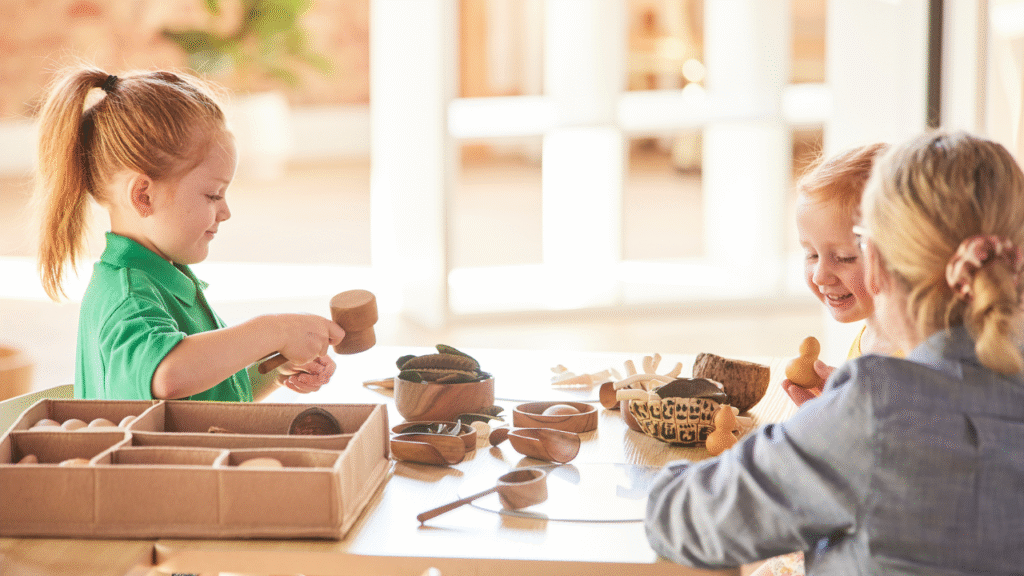
If there’s one thing all children love, it’s play! And beyond the fun, playtime is essential for your child’s well-being and development, particularly when it involves interacting with children their own age in early learning environments.
Research from the Department of Education and Training Victoria (2022) confirms that play is a cornerstone of early childhood education, supporting social, emotional, and cognitive growth. That’s why at Believe Early Learning in Mooroopna and Eaglehawk, play is carefully woven into our programs to provide meaningful learning opportunities for children across Shepparton, Bendigo, and regional Victoria.
Here are three important life lessons your child learns when playing with their peers:
1. Social Skills and Communication
When children play with peers of their own age, they develop special friendships as well as essential social and communication skills.
- Taking turns in playground games, sharing toys indoors, or working as a team in sports and group activities facilitates interaction.
- Negotiating, resolving conflicts, listening, showing empathy, and supporting others are some of the skills that children gain by learning to interact with each other.
Research by the University of Melbourne (Barblett & Maloney, 2010) shows that peer play nurtures emotional understanding and communication abilities which form the basis for strong lifelong relationships and later academic success.
At Believe Early Learning, our qualified Early Educators support children as they practice communicating their ideas, expressing their feelings, and learning to collaborate helping to set them up for future success in both school and life.
2. Problem-Solving and Critical Thinking
Children encounter natural challenges in play through solving puzzles, building sandcastles, or creating stories together. These moments promote their problem-solving and critical thinking skills.
- Bush kinder adventures in Mooroopna, constructing with blocks in Eaglehawk, or collaborating on art projects provide practical experiences for the children.
- Creative thinking, decision-making, flexibility, and resilience in the face of challenges equip the children with a solid foundation for building lifelong skills.
The Australian Institute of Family Studies (2017) highlights that these kinds of experiences help children assess situations, adapt strategies, and apply problem-solving in real-world and real-life contexts. These are not only essential for academic readiness but also for handling everyday situations with confidence.
3. Emotional Regulation and Resilience
Playing with peers allows children to learn about a wide range of emotions, including excitement when winning, disappointment when losing, or frustration when waiting for a turn! These interactions provide invaluable opportunities for the children to develop emotional regulation and resilience.
- Learning to manage frustration, cope with disappointment, celebrate success, and bounce back after setbacks build great emotional benefits.
- Stronger mental health, self-control, and emotional maturity are some of the beneficial outcomes.
A Monash University (2021) study emphasises that structured peer play is a powerful way to build self-regulation and protective factors for long-term mental health.
At Believe Early Learning, our qualified Early Educators guide each child through these experiences, helping them learn to persist through challenges and build the emotional strength needed for lifelong well-being.
Supporting Your Child’s Growth in Regional Victoria
At Believe Early Learning Mooroopna and Eaglehawk, our qualified and caring Early Educators ensure your child gains much more than social enjoyment from their play. Our age-specific programs ensure every activity is designed to:
- Strengthen communication and social skills.
- Develop problem-solving and critical thinking abilities.
- Build resilience and emotional well-being.
We welcome families from Shepparton, Bendigo, and across regional Victoria to see how play-based learning nurtures confident, capable, and happy children.
👉 Book a free Stay and Play session today so that your child can experience the joy of learning with peers, while you enjoy a coffee and see how we support every child’s growth.
References (Australian Sources)
- Barblett, L., & Maloney, C. (2010). Complexities of assessing social and emotional competence and well-being in young children. Australasian Journal of Early Childhood, 35(2), 13–18.
- Australian Institute of Family Studies (2017). Children’s play and learning in Australia. [AIFS Research Paper].
- Department of Education and Training Victoria (2022). Early Childhood Education and Care: Learning through play.
- Monash University (2021). Play-based learning and emotional regulation in early childhood education.
